Friday, March 1, 2019

In the Mood For Love


Written, directed, and produced by the famous, Wong Kar-wai and starring Tony Leung and Maggie Cheung, In  the Mood for Love  became a well-received movie rather quickly. Released in the year 2000, In the Mood for Love premiered at the Cannes Film Festival on 20th May.  It garnered numerous awards both locally and internationally. This movie even appeared on many top movies list and according to 2016 BBC poll, it was ranked the second best film of the 21st century by 177 film critics around the world. (BBC, 2016). This film utilizes many techniques that were employed in French Impressionism. In this blog the movie will be dissected and the moments inspired by French Impressionism will be delved into.

French Impressionism was birthed during World War 1, when the French film industry was in a massive decline.  At this point there was an influx of American films. Even after the war the local scene did not recover.  A few younger directors, astonished by American movies and their energy.  These young directors such as Abel Gance, Louis Delluc, Germaine Dullac, and many more felt that, films should be like all other art. They should be a vehicle for feelings. This developed in to the avant-garde cinema that is French Impressionism. The core idea of French Impressionism is the aim to give the narrative more subjective depth.  Intimate psychological stories became the main focus of these filmmakers. Emphasis on the mood and feeling were prioritised.  A deep exploration of the characters is also a common trait. These films often show us memories of the characters, their dreams, fantasies, and their mental states.  French Impressionism also uses rhythmic editing to illustrate characters feeling.  (Bordwell  & Thompson,  2013).

In the Mood for Love , is a love story revolving around neighbours Su Li-zhen (Mrs. Chan),  and Chow Mo-wan(Mr Chow ). Both have are married and have spouses who are away for long periods of time. A friendship develops between them as they suspect and eventually confirm that their spouses are having an affair with each other. They soon develop feelings but are unable to act on them due to a conservative society in the sixties. They eventually are separated as Mr Chow leaves for work in Singapore and Mrs. Chan stays in shanghai both longing for a love they can’t have.

The elements of French impressionism in this movie comes from its characters. The characters feelings are often portrayed by the mise en scène in the movie. There are many scenes where this can be observed.  For example, the scenes where Mrs. Chan and Mr Chow are talking to their partners, their partners faces were never shown. Only their voice was heard. One could conclude that, the director chose to do this, to illustrate the fact that it doesn’t matter who your partner is, you might just fall out of love and develop feeling for another person. This is what happened to their marriages as their spouses were having an affair with each other. Another interesting scene was when Mrs Chan observed Mr Chow from the bottom of the steps at the wanton noodle shop. She was secretly observing him as he lit his cigarette and started smoking. That scene gave an impression like she was spying on him almost like a forbidden fruit that she can’t have. Speaking of cigarettes, Mr Chow would always smoke when he is confusion and the camera would pan to the cloud of smoke formed to highlight his present feelings.
The characters are shown to live an idyllic and routine based live style. This is often illustrated with the signature music that is played when the characters are in routine. This was meant to show us the audience the feeling of being stuck in a routine whilst being married and how it could drive one to be unfaithful as they believe that would add a different element to their lives.  

The secrecy maintained by Mr Chow and Mrs Chan while they were together also is an interesting element of French Impressionism. The characters were always anxious that  people would find out about their friendship and will start to gossip. Mr Chow got a hotel room so that they could meet and write together without being spotted. Mr Chow also got out of the taxi they were sharing at an earlier to ensure they wouldn’t be spotted together. Mr Chow even went to the extent of moving to Singapore because they realised their feelings for each other and couldn’t bear the thought of their neighbours talking about them.

Rhythmic editing is used in scene where Mrs Chan climbs the stairs  to catch Mr Chow before he departs for Singapore. This is a classic French Impressionist trope. Besides, that in this scene when she reaches the empty hotel, room the curtains are waving about in the air, signifying the ship has sailed and she will never be with him.

I personally loved this movie and its portrayal of the two lovers who could never be. In the Mood for Love was movie with a lot of nuance. It was the subtle details that elevated the movie to the heights that it reached. The film’s efficient method of imparting the story was. From the discussion above is pretty evident that French impressionism was a heavy influence in this film’s style as the themes and tropes were heavily present in this film.

References
1)      David Bordwell, Kristin Thompson (10th ed.) Film Art: An Introduction, U.S.A Mcgraw-Hill

2)      BBC, (2016) 21st century’s 100 greatest films. Retrieved from: http://www.bbc.com/culture/story/20160819-the-21st-centurys-100-greatest-films  

Tuesday, February 19, 2019

Monster House.


Monster house is a 2006 animated horror/comedy film directed by debutante director Gil Kenan. Featuring an ensemble of voice actors such as, Mitchel Musso, Sam Lerner, Spencer Locke, Steve Buscemi, Maggie Gyllenhaal and many others, the film released 21st July 2006 to critical acclaim and commercial success. Produced by ImageMovers and Amblin Entertainment, the film grossed 140 million dollars against its budget of 75million. One of the reasons this movie was successful was because it appealed to the audiences in different ways due to the mixed genres present in this film.  In this, we plan to discuss the various genres present in Monster House by using Rick Altman’s Semantic/Syntactic Approach. 

As was previously discussed, Rick Altman’s theory uses semantics and syntax in a film to study and deduce its genre. Semantics being the mise en scène in the movie.  The visuals, the set design, the costumes, actor behavior and movement,  and basically anything that is a visual clue of what the story is about. Syntax is regarding the themes, structures, characterization,  conventions, and basically the parts of the story that we can extract from the narrative. These two aspects will be analysed concurrently to deduce the mixed genres present in Monster House. The genre’s that are evident in this film are basically horror, action, and comedy.

This story follows the protagonist D.J as he investigates and observes a creepy and dilapidated house that is located right opposite his own in his neighbourhood. The house has a reputation and a signage outside that urges people to stay away lest the face the wrath of the mean spirited and cranky owner, Horace Nebbercracker’s wrath. Nebbercracker has a penchant for hoarding all the kids’ toys that accidentally find their way to his yard. Things started to escalate,  when D.J’s friend Chowder loses a basketball onto Nebbercracker’s yard and begs D.J to retrieve it. The whole ordeal of D.J retrieving the ball causes Nebbercracker to have a heart attack and he is soon presumed dead. At this point the house is revealed to be sentient and begins to torments D.J. He then saves a girl selling Halloween candy, from being eaten alive by the house.  D.J, Chowder, and Jenny(the candy salesperson) from an unlikely trio in an attempt to defeat the house to save the countless children who would be victims to the house on  Halloween. Through their escapades and Nebbercracker’s unlikely return, they discover that house is possessed by the spirit of his late wife, Constance, who was encased in cement due to an accident. The four of them eventually managed to outwit the sentient house chasing them and blow  it up to release Constance from this earth.
The genre of horror is very evident in this movie. It falls under the category of unnatural horror as the main antagonist is a sentient house that eats people. The threat to normalcy arises when the house is affected by the presumed death of Nebbercracker and begins luring people and eating them. The semantics in this is the Monster House itself which has a mouth, sharp teeth, tongue and even sprouted limbs during the final chase scene. The syntax is the fact that Constance, was revealed to be encased alive in cement and that her spirit resides in the house.
The action genre, is pretty clear during the chase scene at the final parts of the movie. The house chases our trio and Mr Nebbercracker because it believes that he is going to get rid of it. When the semantics were analysed it gives is the classic action movie tropes. There is a continuous high energy sequences and physical stunts. The characters had to evade the house by running away from it. They even had to jump over fences to get away. There was a fight sequence where Chowder commandeered the excavator and battled the house. Adding to that, the scene where D.J had to swing on the crane and throw the dynamite into the house was also an example of an action movie semantic. The explosion of the house just added the cherry on top as it’s the most common of action movie semantics. The syntax of action that is prevalent is the fact there is a clear good vs evil narrative in which the action centers on the main protagonist. There is also an aspect of resolution of threat after a prolonged battle in which the house is defeated at the end after the fight.

The comedy genre is also very present in this movie. Not as dominant as the other two, but enough to be mentioned. The semantics of the comedy genre can be seen with Chowder, especially when he plays the basketball. He is shown to be terrible at the sport even to the extent of getting hit in the face by the rebounding shot which falls under slapstick humour. Secondly, the character Skull, whom  they consult for advice on how to deal with the house is established as a revered character by D.J and Chowder. When in essence, he seems quite the opposite as he is a delivery driver who plays video games for extended hours.  The syntax is evident though the screwball comedy trope, which can be seen when there is male and female interaction. For example, D.J’s mom insist that his dad say I love you to him, but because of his masculinity he refuses to say it. Secondly, when D.J and chowder try to impress Jenny by exposing each other’s less desirable traits. The two police officers are also an example where there is comedy because they are established as incompetent in their jobs. One, a seasoned veteran who is complacent and another a rookie who is over enthusiastic about his job. This ensues a hilarious exchange when they disagree on how to approach the case.

In conclusion, Monster House is a horror film with elements of multiple different genre. The semantic/syntactic approach allowed us to dissect the individual genres. The rising threats to normalcy and the resolution is a classic horror genre motif. The action genre is evident through the chase sequence and the chracterisation as D.J as the hero. Lastly,  the comedy genre is apparent through the screwball and slapstick moments. Monster House is an interesting film and successfully pulled off the hybrid genre of horror, action, and comedy

Saturday, February 16, 2019

The Sixth Sense.


The Sixth Sense, film written and directed by famed director M. Night Shyamalan released in 1999, by Buena Vista Pictures. It became the second highest grossing movie of the year and managed to bag six Academy Award nominations for Best Picture, Best Director, Best Screenplay, Best Supporting Actor and Actress.  Starring Bruce Willis, Hayley Joel Osment and Toni Collete, The Sixth Sense was a horror movie of sorts.  Not in the typical sense, but had enough of the usual horror movie tropes to be classified as such.  In this, I hope to discuss Rick Altman’s genre theory and the various aspects that can identify the genre of The Sixth Sense.

Genre is usually a very difficult thing to define. Like all things art, it is very subjective. However , if we follow certain similar elements between movies, we can form a theory for genre itself.  The semantic/syntactic approach is a method that seems to work best in classifying films. Developed by Emeritus Professor Rick Altman , the semantics and syntax in a film are analysed concurrently to put the film in its respective category. Semantics is defined as the meaning of words. In this context however , semantics is usually classified as common traits of a genre in a film. This encompasses characters, set design, location, makeup/costume, lighting and basically anything  that is a visual aspect.  For semantics we analyse the mise en scène of various scenes and how the actors portray the characters in regards to movement , language, and behaviour.  Syntax is the arrangement of words and phrases to form sentences. In a film’s sense, it is what we can extract from its narrative. We can observe the syntax by looking at the type of characters in a film, the ideas presented, themes, and conventions.   These two aspects come together to form the genre of a film. Semantics and syntax of The Sixth Sense will be analysed to deduce its genre.(Altman,1984)

The Sixth Sense, revolves around Dr Malcolm Crowe, an esteemed child psychologist as he tries to help, Cole Sear as atonement for failing a previous patient. The aforementioned patient broke into Dr Crowe’s house and shot him before committing suicide due to his increased mental instability. After spending enough time with Cole and gaining his trust, Cole eventually reveals to Dr Crowe that he can see dead people. Initially, Dr Crowe wanted to stop trying to help Cole because he thought Cole was delusional. But after reviewing his old work, Dr Crowe believes Cole and starts to help him adjust to his abilities.  He suggests  that Cole should use his gift and help the restless spirits to fulfill their last desires.  Eventually once Cole had made peace with his gift, he becomes more sociable and seems happier and it became time for Dr Crowe to be on his way. When Dr Crowe reaches home and tries to talk to his wife, hi wedding ring falls from her grasp and it becomes revealed that Dr Crowe died on the night of the shooting and Cole was helping him with his unfinished business. He then departs to the presumed afterlife.

Through a semantic approach it’s easy to see why this movie can be categorised as a horror movie. It has all the credentials to be classified as such.  For starters, there are ghosts in this movie. Cole sees various ghosts in this movie trying to make contact through him. The appearances of the ghosts add to the horror element as most of them appear rather gory and unsettling. For example, the little girl vomited, the lady in the dressing room had a burnt face, there were three corpses hanging from the ceiling and a boy with a gunshot wound on his head. These are the few of the ghosts that Cole could see. For the squeamish, this is a very unnerving sight. Besides that, the  overall lighting for the movie seems very dull and ominous. Scenes like the basement where Dr Crowe works from, and the kitchen where Cole sees the ghosts all have a darker lighting. The colours used, give a mysterious and creepy vibe that is a staple in a horror movie.
When approached syntactically, the movie gives out a more of a drama vibe. The overall theme of this movie is about is about things left unsaid or unfinished. It can be seen throughout the movie where the ghosts comes back to Cole to ask for his help in communicating. Cole is the messenger in which the ghosts use to relay their messages to the living. The  theme is far from a common horror movie. It isn’t a horror movie for horror’s sake. The horror elements are basically a vehicle to drive the theme. In addition, it has very little syntax related to a horror movie. The only aspect present of a horror film is threat to normalcy, which is observed when Cole says he can see dead people. Besides that, the movie serves as a journey of acceptance for Cole and retribution for Dr Crowe.  Syntactically The Sixth Sense is a drama.

All in all, The Sixth Sense satisfies the three conditions for the horror genre. There are general semantics and syntax that have horror motifs, such as ghosts, gore, and threat to normalcy.  Secondly, the audience can roughly guess where the movie is heading , based on the initial clues. Except for the twist ending though, that was a really well placed twist. Most people wouldn’t have seen that coming.  Lastly, the movie delivered the horror genre by packaging very differently from its counterparts. It is fair to say that The Sixth Sense is not entirely a horror film, it has many dramatic elements to it. It can be considered a hybrid genre of drama and horror because those two elements are prevalent in this film.  

References


1) Rick Altman, (1984) A Semantic/Syntactic approach to Film Genre. Cinema Journal Volume 23, pp 6-18, DOI: 10.2307/1225093

Sunday, February 10, 2019

Values to Bind and Build: A Reflection


On 25th January 2019, we were treated to an interesting lecture by YBhg Prof Dato’ Dr Tan Chong Tin. It's was regarding his new book Values to Bind and Build: A Reflection. this book takes a new and refreshing dive into the racial dynamics of our country. Race relations are always a hot issues in any country, more so in a multi ethnic nation like Malaysia. although we thing that in 62 years we have come far in terms of race harmony, events like the recent Seafield Mariamman temple riot prove how volatile things actually are. Although these events are anomalies in an otherwise "peaceful" Malaysia, they still should be paid attention to.

Dr Tan, says one of the main driving force of ethnic relations and its harmony can be boiled down to psychological drives. Being a neurologist for the better part of his life, Dr Tan, made an interesting observation. He sees that patients who suffer epilepsy, suffer far more from stigma related to the condition, than the onset implications of the illness itself. This is what made him come up with the idea of the psyscological drives of ethnic harmony which are ethnic identity, self esteem. and ethnic dignity. In regards to Malaysia, the popular narrative is that, we must embrace unity through our shared identity as Malaysians. Taking pride in your birth culture and identity is always taken as a sign of unwillingness to assimilate. Dr Tan, says that  ethnicities must be allowed to keep their identities. Identity is very important to a human being. To strip that away, is to deny them basic rights of existing. Allowing people to express their identities, will reflect onto national harmony. This is largely due to the fact that this allows people to find similarities in their key differences and this will forge a stronger bond of unity among citizens.


Self-esteem is  an individual's overall subjective emotional evaluation of their own worth. It's basically how much a person values themselves. It is a major component on ethnic harmony. Self esteem, gives people a drive to do things, a need and want to belong in society. This is largely due to the fact that a person will low self esteem will have emotional problems and might eventually react adversely. They might retaliate in ways that they feel is justified because of their self worth. 


 Ethnic dignity is basically the apparent reputation and social standing of an ethnicity in a society. How does the society view the ehtnicity and their contributions? Esteem and dignity are one of the higher tiers of Maslow's hierarchy of need. the need to be respected and viewed as a an essential part of society is crucial to maintain ethnic stability. This was one of the driving force of the May 16th tragedy that befell our nation. The Malays felt insecure and humiliated that in their own country, they were economically backward. This tension eventually spilled over after the 1969 election and riots broke out in our country. That was the birth of the hastily designed New Economic Policy (NEP) which 50 years on still doesn't completely work. The way to maintain ethnic dignities is through competence.


There are several ways to develop competency. One of it is strong work ethic. People must be willing to work for their success. Things like punctuality, hard work, and commitment are things that are encompassed in a strong work ethic. Besides that, openness is a key factor in competency. The willingness to learn and explore paradigms and experiences besides one's own, will enrich their world view. This will make them a more rounded individual armed with an arsenal of perspectives and thoughts on the things around them, thus birthing a more competent individual.. Lastly, freedom is also an essential part of competency. The freedom to express oneself is highly beneficial in creating competence.


Dr Tan also made emphasis on goodness. How that our identity, self esteem, and ethnic dignity all depends on the moral compass that we have. The more morally right things we do, it increases our self esteem, makes carry ourselves with dignity and this eventually becomes our identity. Goodness can generally be cultivated by how we approach things, Joseph Nye a famous political scientist came up with a theory of soft power. This in essence re-imagines how we approach things. It's the ability to co-opt instead of coercing. this is how we deal with our differences in this day and age. Aggressive calls for assimilation is going to bring and change. A more diplomatic approach is needed to prevent radicalization of any ethnicities. A disregard for soft power in regards to handling the issue of so called "Islamic" terrorists, has led to a world wide epidemic of idiotic Islamophobia which has nothing but detrimental effects on global harmony.


All in all, Dr Tan's lecture is a very interesting one and is much needed in today's society. Ethnic relations has and always will be a major concern for a country  like Malaysia. We need to tread lightly but bravely in order to foster better ethnic relation.

Wednesday, January 23, 2019

Train to Busan


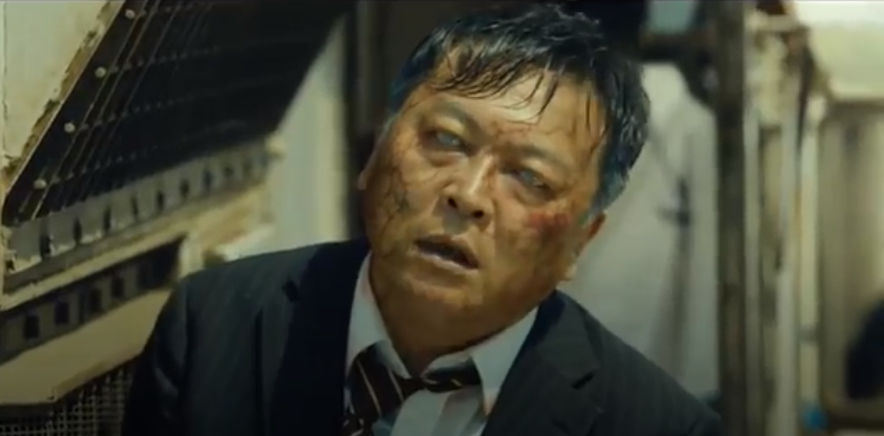
       I first watched Train to Busan, back when it was still showing in cinemas back in 2016. I'll admit that I didn't want to watch it. I was skeptical. My friends had to drag me to watch that movie. My initial hesitation was due to the fact it as a zombie movie and that genre is very over done in mainstream media. Rewatching the movie in class reminded me how beautiful the movie actually is. Train to Busan is a fresh take on the zombie genre and I loved every minute of it.


Train to Busan, entails the story of passengers of the KTX 101 train bound to Busan(supposed stronghold of the country in this apocalypse), as a zombie outbreak occurs around them. They would have been largely spared if not for the stray infected person who snuck aboard and spread the virus to the onboard passengers. Our primary focus is the father-daughter duo of Seok-woo and Su-an. The relationship between the father daughter duo is strained at best in which the typical business-type father is too busy to spend time with his daughter, attend her recitals, and so occupied he gets her the Nintendo Wii (which she already owns) as a birthday present. The next group of people we are supposed to care about are, regular average joe, Sang-hwa and and his pregnant wife Seong-kyeong, two sister grannies, a baseball player and his pseudo girlfriend, and a COO who reeks of evil.


Now that listing of the characters are over, I can get to the part where Train to Busan really accomplished what it set out to do. Telling human stories in a calamity. Usually in a zombie movie like this, we would get an insider look on the contagion and how it happened. The story would usually center around the authorities or people who get intertwined with the authorities. This movie was very much different. We got a perspective that for me is rarely touched. Everyday people. All these commuters were from various backgrounds, but none of them explicitly had a background where they were equipped to handle a zombie apocalypse at its inception. Contrary to American movies, none of the characters were ex law enforcement or military operatives whose experience conveniently grants them plot armour.

      
Speaking of law enforcement, what was really refreshing was the lack of firearms. Due to United States' gun culture, in a typical american movie, guns would have been rampant in a zombie film. Everybody would have had some form of  firearm and have the expertise to be expert marksmen. In Train to Busan, characters couldn't shoot their way through the hoards of zombies, they had to run or take their unfortunate chances with melee attacks, which was honestly so much more thrilling. Its a realistic take on an improbable event. If a zombie outbreak were to happen as I was riding the KTM, you best believe I would have ran out of there. I mean I would have tried. I obviously would have tripped and fell to be one of the first victims but I digress.


There are many notable scenes in this movie, but there are especially a few that left a lasting impression on me. The first being the whole montage of the trio consisting of Seok-woo, Sang-hwa, and the baseball player fighting through the train carriages, to rescue the stragglers and reach the safer train carriage. The way the scene was shot truly left me in awe. It was one of the coolest things I've ever seen. Them forcing their way, through sheer brute force with nothing but improvised weapons was truly captivating. It was so good to a point where I could excuse the deus ex machina of them passing through a dark tunnel so that the zombies lose their sight in darkness and they escape.


 The other scene which was really nice is when they trains crashed around our characters and knocked them unconscious. They awoke to the trains on top of them and the zombies crawling on the window pane right above them. This literally made me flinch in my seat. Absolutely terrifying. I usually hate jump scares, but that was some creative work.


My minor problem with the movie is, in the final minutes, they almost wanted to give the evil COO guy some depth by mentioning his mother. I would have loved to see some reason for his character to behave the way he did, instead of being evil for evil's sake. I would have liked to see some form of motivation behind his vile acts of sacrificing others to ensure that he can live. Like his mother was dying or something. That would have made us think about our choices in such a situation. We can easily say that we wouldn't do something like that in similar circumstances, but given a more empathetic villain, we might be reevaluating our priorities.  Alas, I'm nitpicking, because some people are inexplicably evil and we have to accept that. 


The end where Seok-woo bids farewell to his daughter as memories were flooding him was truly a tear jerker. Its one of those things, where you know exactly what will happen to him, yet its still sad when it does happen. 


When I first watched the movie, the final scene where Su-an and Seong-kyeong were walking through the tunnel as the sniper was taking aim, I thought they would actually get shot. Part of me wanted it to happen because that would have been such a heartbreaking ending. That would have made it all the more real. However, ending it on a somewhat of a lighter note wasn't too bad either as the movie had enough sad deaths as it is.


 I would truly recommend this movie to anyone. I give it  a solid 8/10.